
20+ Years of Historic Building Protection
LOCATION: 37 Fleet Street, LONDON, UK
 Project Background
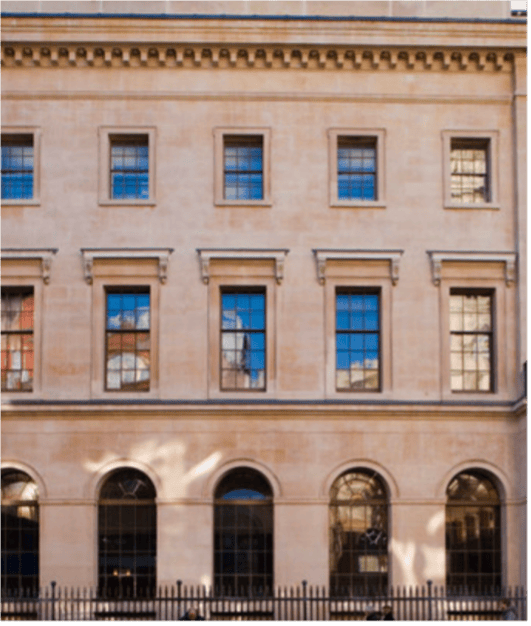
37 Fleet Street, known as Hoare’s Bank, was built in 1829 as the headquarters of C. Hoare & Co, the oldest privately owned bank in the UK and the only surviving independent private bank of its kind.
Corrosion had significantly affected the building, causing cracks in the stone façade as embedded wrought iron cramps and pins deteriorated. Corrosion of these concealed metal fixings threatened the integrity of the surrounding historic stonework, creating a need for a long-term solution that would preserve the building’s architectural character.
The project presented a key conservation challenge: protecting concealed ironwork without repeated intrusive repairs or unnecessary loss of historic stone fabric.
Corrosion Protection of a Historic Building Façade
An impressed current cathodic protection (ICCP) system was designed by Structural Healthcare Ltd to provide long-term corrosion protection to the wrought iron dog cramps and pins embedded within the front stone façade. Specialist contractor PAYE Stonework and Restoration carefully connected each identified metal component, ensuring electrical continuity between the ironwork while maintaining electrical separation between the anodes and cathode.
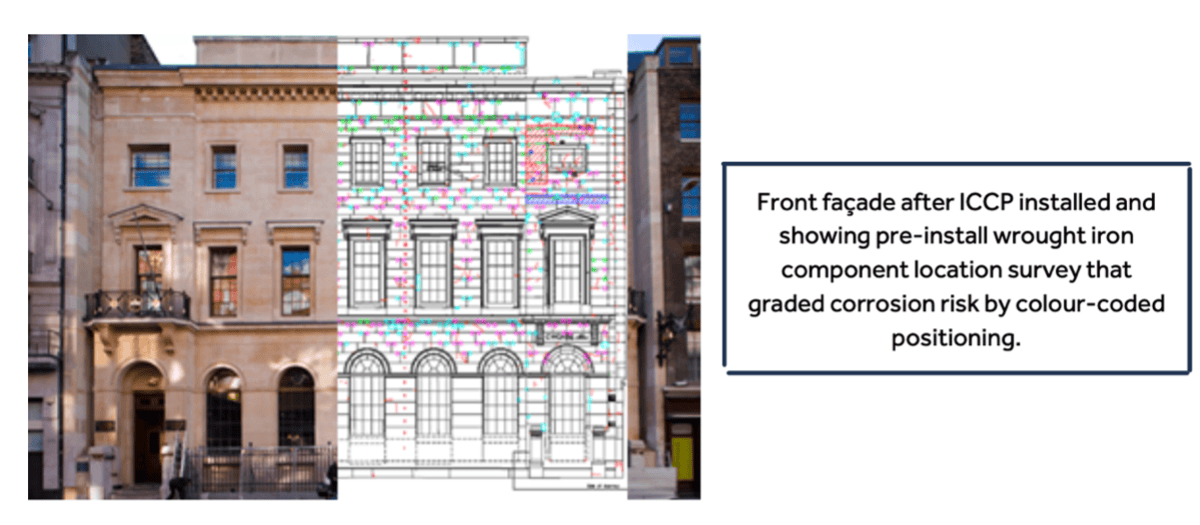
This approach addressed the underlying corrosion mechanism rather than simply repairing the visible damage, providing a preventative strategy for extending the service life of the historic façade.
Product / System Used
- Discrete-anode impressed current cathodic protection (ICCP) system.
- Embedded CP20 reference electrodes.
- AchillesICP network management and control system.
- AiMS online monitoring and reporting network.
 Project Details: Installation and Monitoring
 Project Details: Installation and Monitoring
Corrosion had affected more than 500 iron components, causing cracking in the surrounding stonework. Following surveys and the establishment of electrical continuity between the components, the ironwork was grouped into independently controlled zones by building level.
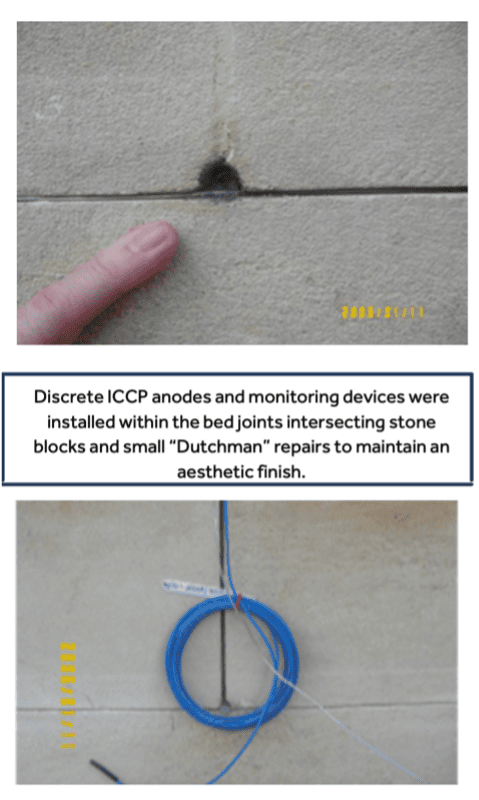
The anode and cathode direct-current circuits, together with embedded monitoring devices, were connected through three zonal enclosures. This arrangement enables remote data acquisition, electronic control and online monitoring of the protection system.
Embedded sensors provide long-term performance data in accordance with the relevant principles of ISO 12696, supporting remote assessment of system effectiveness and informed maintenance decisions. This gives the building owner ongoing visibility of the protection system without relying solely on periodic visual inspections of the stone façade.
Project Impact: Long-Term Historic Preservation
Since the ICCP system was commissioned in 2007, the building owner has reported no need to revisit corrosion-related disrepair to the stonework. The system provides ongoing protection to the concealed wrought iron components, helping preserve the façade and reduce the need for further intrusive masonry repairs.
Key benefits include:
- Preservation of historic fabric: Protecting embedded iron cramps and pins helps limit further corrosion-related damage to the original stonework.
- Extended service life: Addressing corrosion at its source supports the long-term durability of the façade and its concealed fixings.
- Reduced maintenance intervention: The reported absence of repeat stonework disrepair since commissioning demonstrates the practical value of a preventative approach.
- Remote performance monitoring: Online data enables the owner to review system performance and make informed decisions about maintenance and control.
- Sustainable conservation: Retaining existing stonework and reducing the need for replacement supports resource efficiency and the preservation of historic materials.
With the 20-year milestone approaching in 2027, 37 Fleet Street demonstrates how cathodic protection and long-term monitoring can support the conservation of a historic UK building. The project illustrates the value of combining specialist restoration with modern corrosion engineering to protect architectural heritage while extending the useful life of existing materials.
Awards
The project received the ICRI Award of Excellence – Special Projects (2007), recognising the significance of the restoration.