Widespread investment and financial resources are needed to address one of the most talked about topics in recent years: climate change. The effects of climate change are proving disastrous for the environment, and it’s vital that key industries, like construction, are contributing to reducing emissions, adapting their processes and building in future resilience. Ueli M. Angst highlights how society faces two main challenges: maintaining existing ageing infrastructure in developed countries and establishing more sustainable infrastructure in emerging countries[1].
Despite the encouragement around retrofitting and restoration of deteriorating structures, new construction will still be required across both emerging and developed countries. It is essential that parts of the construction community come together to create a sustainable strategy for creating new infrastructure and ensuring it endures the test of time.
For the first time, C-Probe Systems is launching a product specifically for new construction in the built environment in order to prevent and offer control over steel corrosion, an issue that is prevalent in existing infrastructure. The LoCem® Modular Anode Unit (MAU) is a factory-made moulded impressed current cathodic protection (ICCP) component that can be attached in an array directly to steel reinforcement prior to pouring the concrete.
3D Drawing of the LoCem Modular Anode Unit
The purpose of the MAU is to offer vital protection from day one and prevent structures entering into a state of disrepair years into the future, by incorporating the use of cathodic protection at the design and construction stage. The MAU is suitable for all new construction projects, including buildings, bridges and car parks, where the reinforcement steel needs protection.
It offers sustainable resilience through the low carbon alkali activated cementitious geopolymer (LoCem®), which acts as a cathodic protection anode as well as a highly durable cement. Cement is an essential industry but with Portland cement producing around 8% of harmful global emissions, construction needs to start exploring innovative alternatives and adjusted formulations to drive down emissions.
The MAU provides easy installation for contractors and precast producers, as it can be push-fitted to a range of steel diameters, during steel construction. As its name suggests, the wiring between the MAU is also modular and simplifies the electrical installation. Routing of the interconnecting modular wiring can be made at the precast factory in box-outs and completed after delivery to site, making the completion of the installation more efficient.
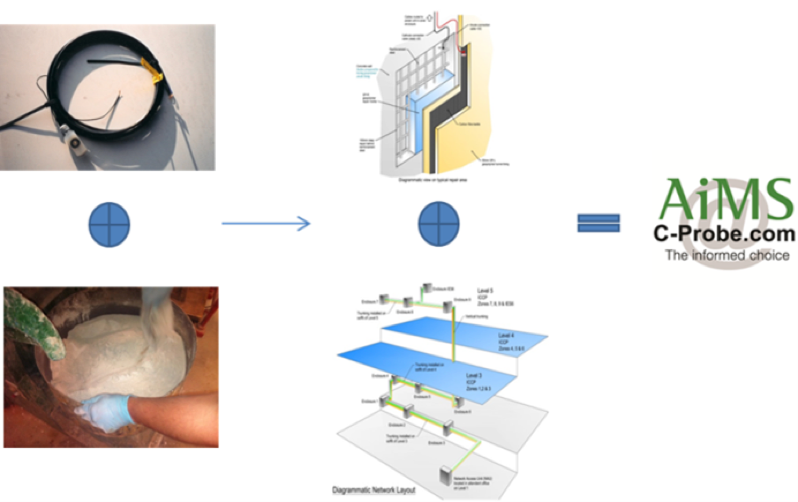
Installation of the product is also described as ‘Plug and Play’, as the wiring is routed to the zonal enclosure, with the network routed between enclosures to the Network Access Unit for communication and control of protection current, that can be altered to different current densities depending on the layout of the reinforcement steel . When this is coupled with C-Probe’s resilience management networks, the MAU is easily and remotely monitored and controlled online. C-Probe’s Achilles Interactive Management Server, or AiMS, takes the structural data and offers clear reporting for performance now and further into the future. Having these important data means clients can take preventative action instead of deferring maintenance, the value of the asset is protected, and they have peace of mind that they have a healthy, functional structure for its whole life.
Technology and innovation will have a key role to play in the switch to a low carbon economy with sustainable infrastructure and the LoCem® Modular Anode offers an accessible way for the sector to achieve this. Through the integration of digital technologies with physical assets, we are able to generate, harvest and analyse important structural data which can ultimately create sustainable resilience for infrastructure. The need to reduce emissions and new construction is vital as we move towards NetZero, and implementing technology like this, alongside the use of low carbon materials such as LoCem®, from day one will allow us to do that.
[1] Angst, U.M., Challenges and opportunities in corrosion of steel in concrete, Materials and Structures, 51:4, 2018
Interested in talking further about the LoCem® Modular Anode and how it can help your current projects? Please get in touch with C-Probe Systems at cwalker@c-probe.com or submit a query via our website www.c-probe.com.
C-Probe are incredibly pleased to announce that their list of acknowledgements and awards continues to grow in 2021! We have won the category ‘Best Use of Emerging Technology’ at the Building Innovation Awards for our low carbon, smart alkali-activated cementitious cement (AACM geopolymer) cement binder, LoCem®! Alongside this, C-Probe were named as a Top 100 Manufacturer at Digital Manufacturing Week in Liverpool.
The C-Probe team attended the Building Innovation Awards ceremony, which we also sponsored, in Manchester on 4th November 2021 which brought together the UK’s key player in the construction industry to celebrate the latest innovations. The Building Innovation Awards look to recognise organisations which are changing the landscape of modern construction through innovative materials and technologies, which not only boost profits, but also deliver a greener, smarter, and safer built environment. The Manufacturer works in a similar vein, looking to recognise pioneering individuals and celebrating their industry success in their Top 100 Alumni.
The recent accolades are additions to C-Probe receiving two awards from the Leeds Beckett University RISE Awards, which places a focus around sustainability, and being published in the CIRIA Sustainability Champions report. All the above recognise C-Probe’s innovative drive towards NetZero and their focus on whole life preservation of structures through corrosion mitigation and demonstrate a shift in the sector in accepting new technologies.
Graeme Jones, CEO of C-Probe Systems, comments on the recent wins:
“The drive to low carbon and NetZero has provided a focus to the value of these innovations that is very satisfying to see given the three decades of trying to have this message heard. All of achievements that have been awarded to us this year demonstrate the growing acceptance of our technology and how sustainability is fast becoming a priority – it’s exciting for us as a business. We are proud to have a made such a significant impact and will continue to combat climate change through sustainably protecting and creating more resilient structures.”
For those who aren’t familiar with C-Probe’s innovation, and the base technology for all their products, LoCem® is used for the restoration of existing masonry and concrete structures, helping to retain embodied carbon and improve energy efficiency. Its unique feature is that it can be used as a repair material and an anode, forming part of a system which is retrofitted into the structure, helping to provide long-term monitoring and resilience. LoCem® serves as a sustainable alternative to traditional materials, as powder binders are produced by repurposing industrial wastes from steel, fossil fuels and mining, when hardened in application-targeted mix designs. It has comparable physical performance as conventional Portland cements mortars, grouts, and concrete and offers over 80% less CO2 emissions.
Look at some of the photos from the night!
If you’re interested in discussing our services for any upcoming projects, please get in touch with enquiries@c-probe.com
The team at C-Probe Systems are very pleased to announce their success at winning TWO of the of the four nominated categories in the Leeds Sustainability Institute’s RISE Awards 2021, hosted by The Sustainability Institute at Leeds Beckett’s University. C-Probe were overall winners in the following categories:
Design, Innovation and Creativity – Achille Interactive Management Server (AiMS)
Heritage Award for Restoration – Low carbon geopolymer bed joint anode (LoCem® & +point®)
The purpose of the RISE Awards is to recognise and celebrate exemplar case studies from the Built Environment, which share emerging best practice in Research, Innovation, Sustainability and Enterprise for new and innovative products, technologies, processes and projects. This year’s awards have been more significant as ever, as we move closer towards the COP26 Summit and priorities spike for the climate change emergency. C-Probe’s low carbon corrosion protection and monitoring solutions fall directly in line with the RISE Awards, as the ultimate aim of our installed systems is to provide sustainable whole life performance and resilience for the built environment, helping to preserve what we already have.
Design, Innovation and Creativity
Our winning submission for the Design, Innovation and Creativity category focused on our corrosion monitoring technology. Clients of C-Probe will have installed corrosion protection systems, such as impressed current cathodic protection, to protect their structure and these digital technologies (AiMS) prove performance or alert to control requirements.
The digital innovation of AiMS helps makes infrastructure sustainable, improving functionality and futureproofing assets by alerting owners to corrosion data, which would ultimately impact the quality and safety of a structure. This falls in line with Environmental Social Governance (ESG) policies, as monitoring a structure’s health reduces construction work and emissions.
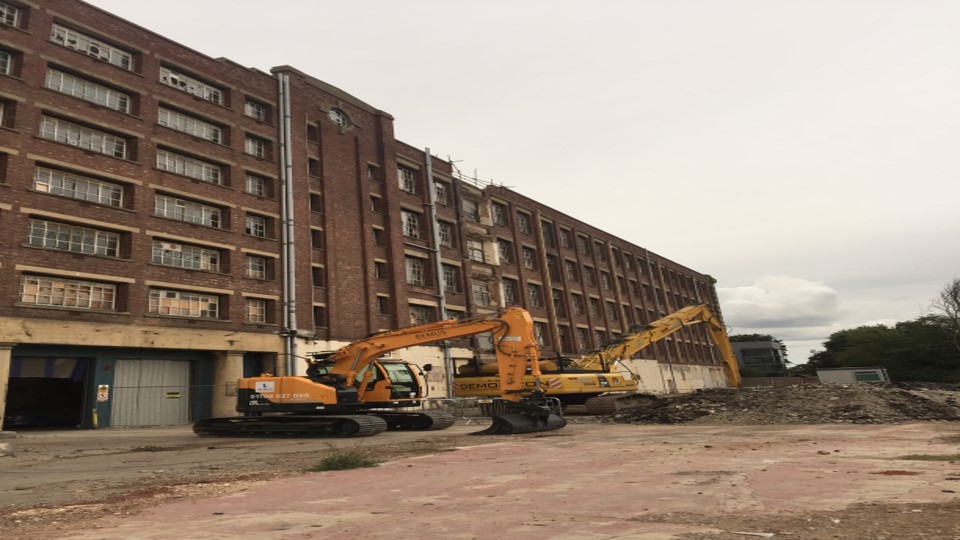
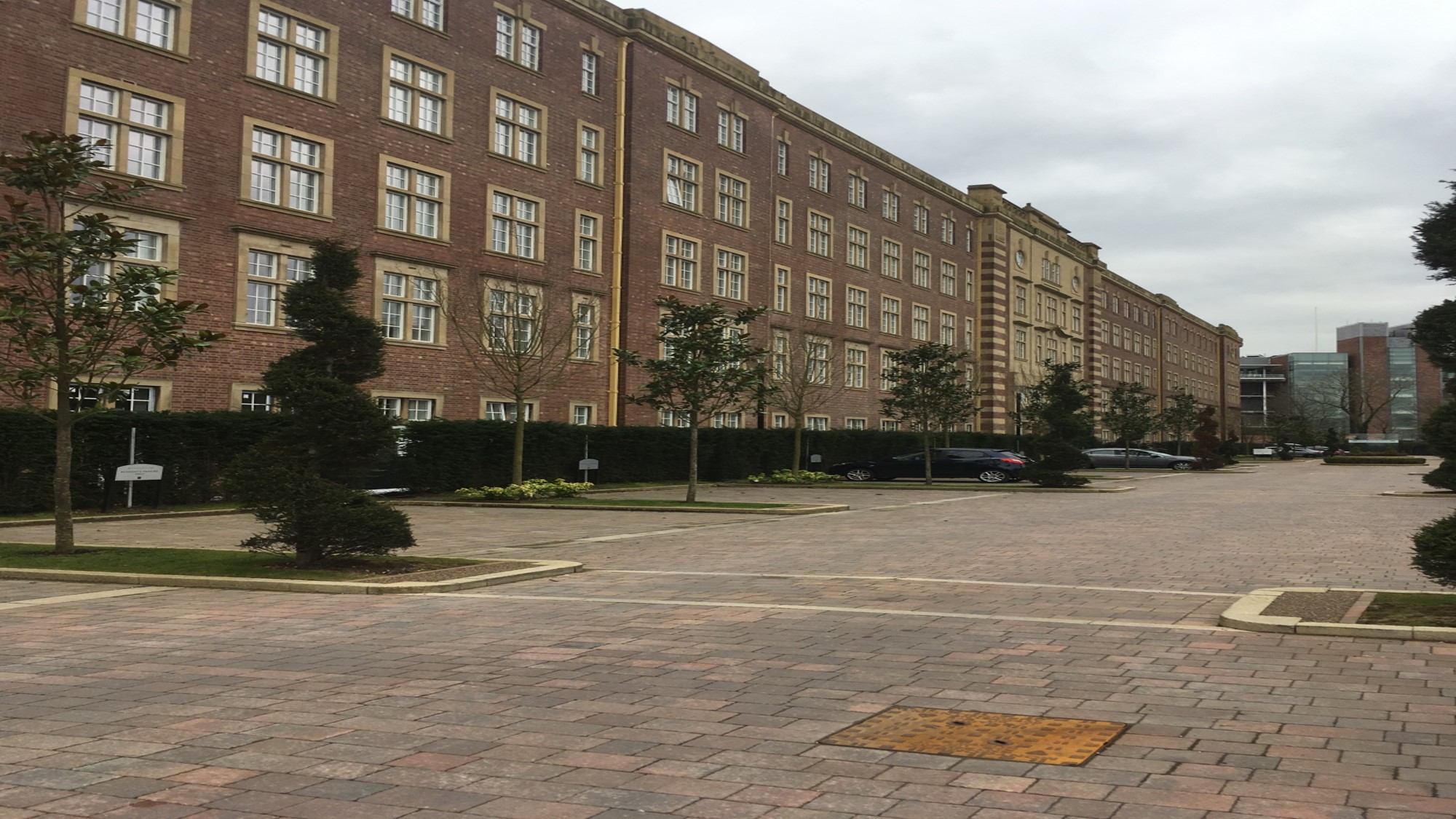
Our submission for the RISE Heritage Award revolved around our involvement in the restoration of the former Terry’s Chocolate Factory in York, UK. The near 100 year old building was facing severe structural corrosion due to the ingress of moisture and water that had gotten worse over time.
C-Probe’s solution was the installation of an ICCP system alongside LoCem ® and +point ® anode mortar meant this building was repaired and protected through cathodic protection, meaning the internal steel could not corrode ever again. The service life of the building was significantly enhanced and resulted in high value residential apartments. To this day, the structure is controlled, and service life tracking is provided through AchillesICP open network system and AiMS online server.
‘The Greenest Building Is… One That Is Already Built.’
– Carl Elefante AIA, LEED AP (2007) in The Journal of National Trust for Historic Perseveration, Volume 21 – No 4.
Elefante’s coined phrase poses great significance on building preservation today, despite his article being written 14 years ago.
Considering the world’s race to achieve NetZero carbon emissions by 2050, the construction sector is working to reform its practices and materials choices to reduce, and even reverse, harsh environmental impact caused by the sector and built environment. Throughout his article, Elefante questions what is truly sustainable and highlights the importance of preservation, shifting the focus on aging building stock that makes up a significant proportion of the built environment around the world. He states that by merging the two concepts of green buildings and preservation, we can ‘transform the legacy of the past into the promise of tomorrow.’
The built environment makes up the areas we live, work, and socialise, but in the UK alone buildings are responsible for 45% of total carbon emissions and 32% of all landfill waste comes from their construction and demolition[1]. Integration of sustainable practices such as the design, delivery and operation of buildings and infrastructure has become essential for conservation efforts; after all once we build it is then an existing structure, so how we preserve it becomes important for future generations.
The development of ‘green buildings’ is a well-known course of action to contribute to a more sustainable built environment. In recent years, we commonly identify these as having biophilic design and covered in foliage on the outside, whilst the inside focuses on increasing the efficiency of its energy, water, and materials. Elefante highlights in 2007 the ‘green building movement’ was emerging as a significant way to combat environmental damage, but he also directs attention to the simple fact:
‘We cannot build our way to sustainability; we must conserve our way to it.’
– Carl Elefante AIA, LEED AP (2007) in The Journal of National Trust for Historic Perseveration, Volume 21 – No 4.
Although these new buildings visually look ‘greener’, how sustainable are they? We must consider the carbon emitted in the construction of the building and, the eventual, dismantling process – from extracting raw materials and manufacturing components, to the toxic environmental effects because of demolition. The retention of embodied carbon in existing buildings presents a significant challenge to the sector and demonstrates how sustainability cannot be fully achieved if these practices are only applied to new buildings.
The reality is that many reinforced concrete and masonry-clad structures will be nearing the end of their service life, and some prematurely, due to the way they have been constructed and reacted to their environment over the years.
Retaining embodied carbon combined with the introduction of Environmental Social Governance (ESG), by the UK Government in all public procurement projects from 1 January 2021, presents the sector with very little choice but to opt for innovations that provide improved resilience methods that respect the environment, whilst giving the industry incentives to develop work, products and services that are aligned with the new policy. It is the adoption of sustainable build materials, for both restoration and new-build projects, alongside the implementation of retrofit systems that extend asset’s service life which will successfully contribute to the reduction of global greenhouse gas emissions.
C-Probe does this through, the innovation of LoCem®, an alkali activated cementitious material (AACM) – a more sustainable alternative to cement that produces up to 90% less CO2 emissions, compared to CEM 1, with a focus on smart controllable corrosion protection products. C-Probe has spent the last 20 years providing sustainable resilience to buildings via retrofitted systems that uses cathodic protection to prevent corrosion, which can be monitored and managed remotely by their open network system to provide service life tracking. This technology is transferrable to new build to provide controlled resilience from day one.
An example of LoCem®’s use was in it’s first commercial use, at the Commerce Trust Building in Kansas, USA which was built in 1906. At the time of the project, this structure was 107 years old and was facing corrosion damage to the internal steel-frame (which is how the majority of 19th Century buildings are built). It was agreed that Impressed Current Cathodic Protection (ICCP) was the best approach for protecting this building, whilst also providing a controllable solution for the long-term. The ICCP system was installed alongside LoCem® anode mortar, replacing the bed joints, which provided benefits through its electrical current carrying capabilities and low carbon credentials. This then being linked to an online network management system (AchillesICP and AiMS) where remote control and monitoring of the system can occur, created a successful and sustainable system for the protection of this building for it’s whole life.
Elefante makes an important point that society is “drunk on the new and now”, clouding our judgment in making legitimate sustainable decisions. To ensure that the ‘new and now’ is resilient, we need to be focusing on the use of innovations that can aid structural preservation efforts, leaving positive legacy for future generations in a cultural, secure, and environmental sense.
“As preservation teaches us all to better value the past…it also helps us to fully awaken to our responsibilities to the future…this is the unbreakable bond between preservation and sustainability.” – Carl Elefante AIA, LEED AP (2007) in The Journal of National Trust for Historic Perseveration, Volume 21 – No 4.
At C-Probe, it is our mission to extend a structure’s whole life performance using low-carbon corrosion monitoring products. This article marks the beginning of a monthly series published on our website blog: Sustainable Resilience.Sustainable Resilience will discuss a range of topics from corrosion protection to sustainability choices and modern methods of construction, resilience in infrastructure and much more. However, it is important to firstly unpack the term Sustainable Resilience and explore what this means to the construction sector in 2021 and beyond.
The decisions we make today lay the foundations of tomorrow. The construction industry is under a lot of pressure in recent years to drastically modernise in its materials and operations, especially with committed NetZero targets set by the UK Government in 2019. As a country, we should be looking to enhance our legacy with smarter, greener structures and protection methods, as opposed to resorting to demolition of unusable buildings, with its associated loss of embodied energy and high economic and resource cost.
Sustainable resilience of a structure starts with the whole life asset performance, which takes into consideration not only the initial capital cost of a built asset but also the operational, maintenance, repair, upgrade, and eventual disposal costs. The sector needs to shift focus to the whole life performance of infrastructure and explore how to reduce costs and CO2 emissions to be more sustainable, in an economic and environmental sense.
It would make sense to start at the most prevalent structural issue that causes degradation and spiralling costs: corrosion. Corrosion is responsible for 70% of damage within the construction industry for steel and concrete structures. The idea that corrosion can be controlled from early stages and structures can be strengthened to protect it from future issues reduces the asset’s carbon footprint and avoids costly maintenance, contributing to the concept of structural resilience.
The effects of structural degradation and corrosion
Corrosion is an electrochemical process, in which we apply lots of energy in production into converting to steel forms, only for the steel to revert to their more natural, lower energy and stable state of ore (iron oxides) over time. The rust that is produced can expand in volume by 8-10-fold which increases stresses in the concrete cover, creating cracks and spalls. The obvious effects of corrosion are on a structure’s condition and aesthetic. If ‘concrete cancer’ can take its course then the structures’ usage, safety and value are significantly impacted, whilst the physical appearance begins to look aesthetically poor, rusted and eventually derelict!
Corrosion affects all aspects of life, however, if not kept under control. From a social perspective, it is extremely disruptive as building maintenance and construction leaves structures temporarily out of use. If degradation occurs in important infrastructures such as highways, electrical towers, parking structures, bridges, or heritage buildings then this has a direct effect on the people using them daily – whether this be a commute to work or school or being able to deliver services efficiently. In extreme cases, structural corrosion can result in injury or loss of life.
The environmental impact of corrosion also comes in various forms. To become more sustainable and reduce whole life costs, the need to demolish corroding buildings needs to drastically decrease. Demolition results in large amounts of waste, which then contribute to air and land pollution. If the construction occurs in a densely populated urban environment, the pollution and noise then progress to become an issue for the surrounding community.
Corrosion is the single biggest cause of spiralling cost of degradation to economies yet, whilst standards exist, there is no legislation is in place to mandate control. There is clear evidence that is has an impact on all aspects of life, so with sustainable solutions available it seems timely to develop awareness and vital to take advantage of such technology.
What do C-Probe use for low-carbon restoration?
To control corrosion, C-Probe use smart materials that build, repair, protect, strengthen, and monitor structures, so asset owners can take preventative actions to manage the future. Our smart materials centers on LoCem® – a low-carbon, alkali-activated cementitious material (AACM geopolymer), developed into a range of products over the past 10 years with Sheffield Hallam University, that can be formed as an anode in mortar and concrete forms.
So, in what ways is LoCem® a low-carbon, smart material?Firstly, its production is completely sustainable, as it is produced at our St Helen’s manufacturing facility using industrial by-product waste and with no heat. This results in over 80% less CO2 emissions compared to traditional Portland cements!
It is classed as a smart material as it can be controlled by applying current to provide Impressed Current Cathodic Protection. The effect on the steel can then be monitored and used to draw out valuable performance data for asset owners. This is part of our open network monitoring system (Achilles Suite of Structural Healthcare Systems) that provides onsite data to access online using the AiMS (Achilles Interactive Management Server). Whether it be tracking service life, or for due diligence or a monthly performance report, our smart materials enable our clients to remotely control and monitor their structure, enabling them to cut costs in unexpected maintenance repairs caused by corrosion.
In addition to this, we have manufactured it to have desired physical and mechanical characteristics that improve a structure’s durability. This includes excellent compressive and flexural strength, freeze-thaw, chemical and acid resistance as well as fire resistance for at least at least 5 hours at 1200°C.
From here, we can create systems of quality which provide resilience to structures.
Recent publications such as The National Infrastructure Strategy and The Construction Playbook have already outlined how the construction sector is progressing – acceptance of innovative solutions and corrosion management, we argue, is a key factor in this. We have worked over decades promoting structural resilience, as this is vital for improving whole life performance of structures. It is with our low-carbon, smart materials that we are not only creating smarter, more sustainable infrastructure, but also giving asset owners more control and insight into their investments.
For more information about our services and products, please contact us here. Stay tuned for monthly articles on our website blog, Sustainable Resilience!
Get in touch with any questions, queries or potential projects.